
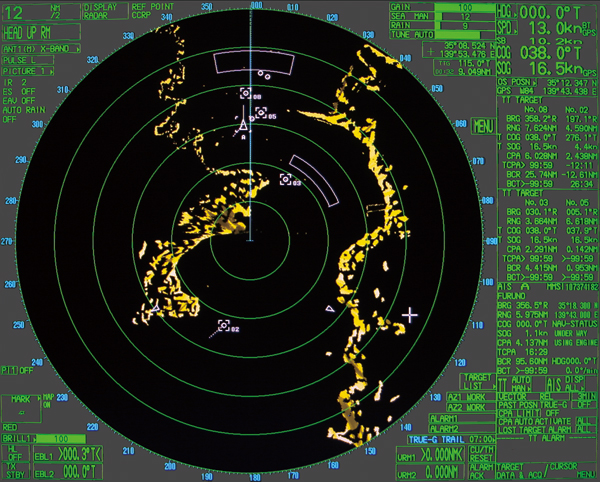
There’s a piece of technology, before being used to help forecast the weather, detect and track aircraft, measure the speed of automobiles; map the surface of the earth from space, and measure properties of the atmosphere and oceans, that are used in war to detect enemies, battleships and aircraft. The name of it is radar, stands for radio detection and ranging.

This is a useful technology first being used by Heinrich Hertz in his experiments in the late 19th century that shows radio waves can be reflected by metallic objects. However, until the 20th century a German inventor Christian Hülsmeyer applied the principles discovered by Hertz and several other scientists to build a transmitter to help trains avoid collisions in fog. Until world war 2, countries began to experiment between radar and other methods of aircraft detection. Radar proves to be the most effective method so they used it and through a long time, it became the radar we know today.

In simple language, radio waves are emitted from an antenna. As they hit an object in the atmosphere, the energy is scattered in all directions. Some of them are being reflected directly back to the radar. The larger the object, the greater the amount of energy reflected back to the radar. In addition, the time it takes for the energy beam to travel and return to the radar also provides the distance to that object. Radars in their basic form have four main components:

- A transmitter, which creates the energy pulse.
- A transmit/receive switch that tells the antenna when to transmit and when to receive the pulses.
- An antenna to send these pulses out into the atmosphere and receive the reflected pulse back.
- A receiver, which detects, amplifies and transforms the received signals into video format.
This is a very useful technology that is used in communication, data transmission, predicting weather, object detection and a lot more in our daily lives.
 Science for All
Leave a comment